
Cremonese's Tactical Triumph Over Udinese in Serie A
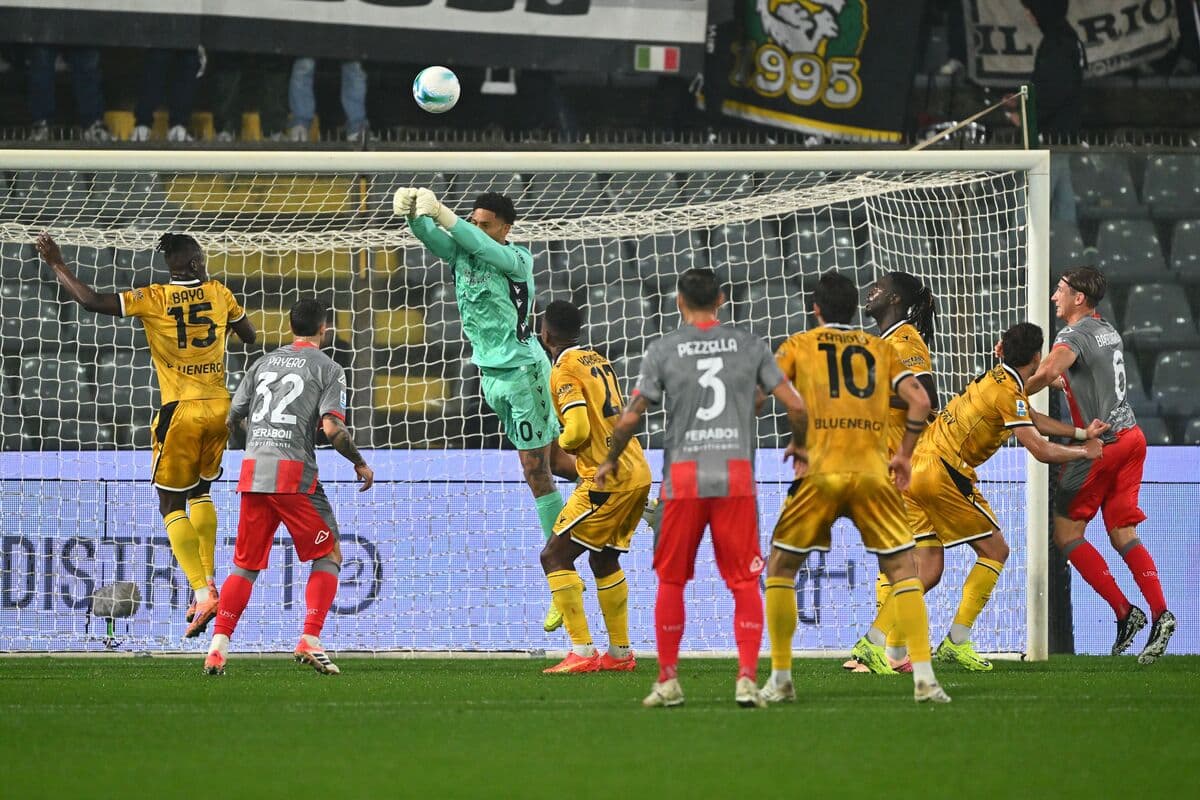
Under the Friulian lights of the Bluenergy Stadium – Stadio Friuli, a tense Serie A narrative quietly unfolded. Udinese, sitting 10th with 50 points and a goal difference of -2 (45 scored, 47 conceded in total), hosted a desperate Cremonese side in 18th on 34 points, burdened by a total goal difference of -22 (31 for, 53 against). In a season where both teams have lived the 3-5-2 as a kind of tactical identity, this Regular Season – 37 clash became a study in mirrored systems and contrasting emotional states: mid-table consolidation versus relegation survival.
The 1-0 away win for Cremonese, sealed by a first-half strike and then protected with grim resolve, fits almost perfectly with both teams’ seasonal DNA. Heading into this game, Udinese had been inconsistent at home: 6 wins, 5 draws and 8 defeats from 19, scoring 18 and conceding 21. Their home attack has been modest at 0.9 goals per game, their away edge (1.5 goals per game on their travels) never quite translating to Friuli. Cremonese arrived as a fragile but stubborn traveller: 5 away wins, 3 draws and 11 defeats, scoring 14 and conceding 28 away – just 0.7 away goals per game, but capable of grinding out clean sheets (5 away, 11 in total).
Both coaches doubled down on their structural comfort zone. Kosta Runjaic lined Udinese in a 3-5-2 with M. Okoye behind a back three of T. Kristensen, C. Kabasele and O. Solet. The wing corridors were entrusted to H. Kamara and J. Arizala, with L. Miller, J. Karlstrom and A. Atta forming a central trio. Up front, A. Buksa partnered the season’s standout, K. Davis. Marco Giampaolo mirrored the shape: E. Audero in goal, a defensive trio of F. Terracciano, M. Bianchetti and S. Luperto, a five-man midfield with T. Barbieri and G. Pezzella wide, M. Thorsby, A. Grassi and Y. Maleh inside, and a front two of F. Bonazzoli and J. Vardy.
Yet the most telling tactical voids were not on the teamsheet, but in the absences list. Udinese were stripped of creativity and vertical threat with N. Zaniolo out (back injury), alongside J. Ekkelenkamp, A. Zanoli and the suspended K. Ehizibue. Zaniolo’s 5 goals and 6 assists, plus his high-volume duels and dribbling, are central to Udinese’s capacity to break lines and destabilise mid-blocks. Without him, the burden of chance creation fell more heavily on L. Miller between the lines and on the wing supply of Kamara and Arizala, but the side inevitably became more direct and Davis-dependent.
Cremonese, meanwhile, travelled without defensive organiser F. Baschirotto and without midfield energy and depth from W. Bondo, F. Ceccherini and F. Moumbagna. That forced Giampaolo to trust M. Bianchetti as the central reference in the back three and to lean even more on G. Pezzella’s dual role as wide outlet and defensive firefighter. Pezzella’s season profile – 49 tackles, 11 interceptions and 11 blocked shots, but also 8 yellow cards and 1 red – encapsulates Cremonese’s knife-edge approach: aggressive, often late, and permanently flirting with disciplinary danger.
This disciplinary edge shaped the tone of the contest. Across the season, heading into this game, Udinese’s yellow-card pattern showed a clear late-game spike: 27.94% of their yellows arrived between 61-75 minutes and 22.06% between 76-90. Cremonese are even more combustible late on, with 26.09% of their yellows in the 76-90 window and a cluster of reds in extended time (two red cards between 91-105 minutes, plus another outside the standard ranges). In a tight fixture like this, every marginal duel – especially around Pezzella on one flank and Kamara on the other – carried the threat of a card reshaping the tactical landscape.
The “Hunter vs Shield” duel was clear: K. Davis, with 10 total league goals and 4 assists, against a Cremonese defence that had been conceding 1.5 goals per game away. Davis’ profile – 38 shots with 25 on target, 44 dribbles attempted with 30 successful, and 310 duels contested with 146 won – marks him as Udinese’s primary chaos agent. The plan was obvious: use Buksa as a reference to pin the Cremonese centre-backs and free Davis to attack the channels between Terracciano and Bianchetti or between Bianchetti and Luperto.
Instead, Cremonese flipped the script. Bonazzoli, their own leading scorer with 9 total goals and 2 penalties converted, became the spearhead of a ruthless transition plan. His 55 shots (31 on target) and 242 duels (125 won) underline his capacity to both finish and act as a pressing trigger. With Vardy alongside him, Cremonese could press Udinese’s first line, force rushed distribution from Kabasele and Solet, and then break quickly into the spaces behind the wing-backs. The decisive first-half goal embodied that idea: an aggressive regain, a vertical release into the channels, and Bonazzoli’s movement punishing Udinese’s three-man rear guard before they could reset.
In the “Engine Room”, J. Karlstrom’s role was to anchor Udinese’s midfield, screening in front of the back three and allowing Miller and Atta to step forward. Opposite him, A. Grassi and M. Thorsby were tasked with compressing central space, funnelling Udinese wide where Pezzella and Barbieri could engage aggressively. Without Zaniolo dropping into pockets, Udinese lacked a natural half-space playmaker, and Cremonese’s compact 3-5-2 block held its shape, forcing hopeful crosses rather than high-quality cut-backs.
From a statistical prognosis standpoint, the outcome aligns with the underlying trends more than the raw league positions suggest. Udinese, despite 14 total wins, have failed to score in 10 total league games and average only 0.9 goals at home; Cremonese, for all their relegation-zone status, have kept 11 clean sheets in total and are structurally comfortable defending deep in a back three. Both sides are perfect from the spot this season – Udinese scoring all 5 penalties, Cremonese all 3 – but with no penalties awarded here, open-play efficiency became decisive.
Following this result, the story is of a relegation-threatened side that leaned into its defensive identity and its leading scorer’s ruthlessness, while a mid-table team, stripped of its chief creator, could not convert territorial control into clear chances. The xG balance (while not explicitly given) would likely tilt towards a low-margin contest, with Cremonese maximising a small number of high-quality breaks and Udinese accumulating lower-value attempts.
In tactical terms, it was a victory for structural discipline and transition clarity over possession without incision. In narrative terms, it keeps Cremonese’s survival flicker alive and leaves Udinese to reflect on how fragile their attacking structure becomes when one creative pillar is removed.
Related News

David Alaba Poised for Surprising Move to Udinese in Serie A
Milan Dominates Lecce: Tactical Analysis of a 3-0 Victory

Juventus Defeats Atalanta 2-0: Tactical Insights and Key Matchups
Frosinone's Tactical Mastery Shines in 2–0 Victory Over Como
Fiorentina and Napoli Share Points in Serie A Clash
AS Roma vs Inter: Tactical Insights from Serie A Clash