
Brighton vs Wolves: Premier League Late-Season Fixture Insights
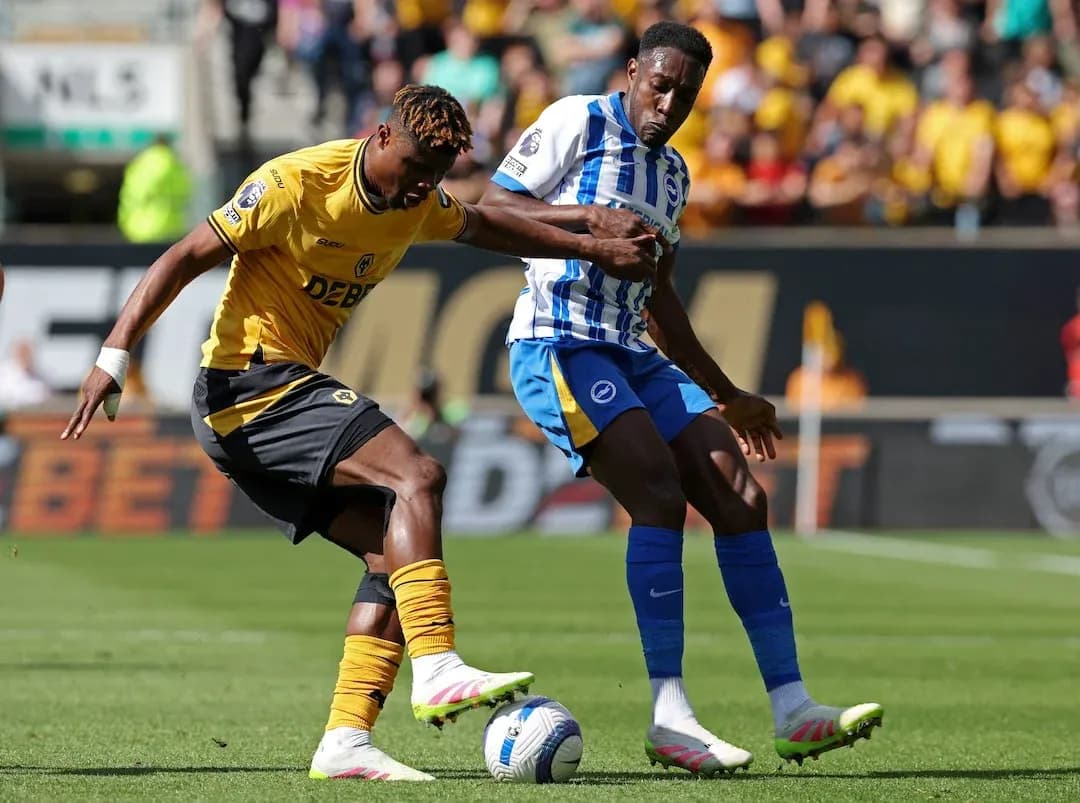
In 2026 this is a late-season Premier League fixture at the Amex Stadium in Regular Season - 36, with very different pressures on each side. In the league phase Brighton sit 8th on 50 points with a +7 goal difference (49 scored, 42 conceded), pushing for a strong top-half finish and an outside European claim, while Wolves arrive bottom in 20th on 18 points with a -38 goal difference (25 scored, 63 conceded) and are locked in a deep relegation battle. The match therefore carries far more survival weight for Wolves, but it is also a key test of Brighton’s ability to convert a solid campaign into a tangible step forward in 2026.
Head-to-Head Tactical Summary
Recent meetings between these sides have been tight and often decided by fine margins across league and cups. On 5 October 2025 at Molineux Stadium in the Premier League (Regular Season - 7), Wolves drew 1-1 with Brighton, having led 1-0 at half-time. On 10 May 2025, again at Molineux in the Premier League (Regular Season - 36), Brighton won 2-0, leading 1-0 at half-time in a controlled away performance. On 26 October 2024 at the American Express Stadium in Premier League action (Regular Season - 9), Brighton and Wolves shared a 2-2 draw, with Brighton 1-0 up at half-time, underlining Wolves’ capacity to recover away from home despite their broader struggles.
In cup competitions, Brighton have edged the balance at home. On 18 September 2024 at the American Express Stadium in the League Cup 3rd Round, Brighton beat Wolves 3-2 after leading 2-1 at half-time in an open, high-scoring tie. Earlier that year, on 28 February 2024 in the FA Cup 5th Round at Molineux Stadium, Wolves defeated Brighton 1-0, having been 1-0 ahead at half-time, showing they can execute a compact, knockout-style game plan when needed. Overall, the pattern is of relatively even scorelines, with Brighton slightly stronger at home and Wolves more effective in cup, one-off scenarios.
Global Season Picture
- League Phase Performance: In the league phase Brighton’s 8th place is built on 50 points from 35 matches, with 49 goals for and 42 against, reflecting a positive but not dominant profile. Their home record is strong: 8 wins, 6 draws and 3 losses from 17, with 27 goals scored and 17 conceded. Wolves, by contrast, are 20th with 18 points from 35 games, having scored only 25 and conceded 63. Away from home they have yet to win in the league phase (0 wins, 5 draws, 12 losses), with just 7 goals scored and 30 conceded, which underlines a very fragile away side (0.4 goals for and 1.8 against per away game across all phases, mirrored by the league-phase totals).
- All-Competition Metrics: Across all phases of the competition, Brighton show a balanced attacking and defensive profile: 49 goals for and 42 against in 35 matches, averaging 1.4 goals scored and 1.2 conceded per game. Their clean sheet count (9) and relatively low failed-to-score total (7) point to a stable structure in and out of possession. Their disciplinary profile is controlled, with yellow cards distributed mostly between minutes 46-60 and 76-90, indicating an aggressive but generally disciplined press in the second half. Wolves, across all phases, average only 0.7 goals scored per match (25 in 35) against 1.8 conceded (63 in 35), signalling a blunt attack and a vulnerable defence. They have failed to score in 18 of 35 matches and kept just 4 clean sheets, with a heavy yellow-card load in minutes 46-75, consistent with a team often chasing games and forced into late defensive actions.
- Form Trajectory: In the league phase Brighton’s recent form string “LWDWW” shows 3 wins in their last 5, with only 1 defeat, suggesting upward momentum and improved efficiency in closing out matches. Across all phases their longer form line includes short winning streaks (maximum 3) but also clusters of draws and narrow losses, indicating some inconsistency but a generally competitive level. Wolves’ league-phase form “DLLLD” reveals no wins in their last 5, with 3 losses and 2 draws, consistent with a side unable to build momentum at a crucial stage. Across all phases their extended form string is dominated by long losing stretches (a biggest losing streak of 11), with only brief interruptions of draws or back-to-back wins, pointing to a persistently negative trajectory.
Tactical Efficiency
Across all phases of the competition Brighton’s attacking efficiency is supported by an average of 1.4 goals per match from a side that predominantly lines up in a 4-2-3-1 (30 appearances) and occasionally 4-3-3. This stable structure has produced a highest home scoreline of 3-0 and a highest away of 1-3, showing they can both dominate at home and transition effectively away. Defensively, conceding 1.2 goals per game with 9 clean sheets and only 7 matches without scoring illustrates a reasonably clinical attack and a relatively compact defence, especially at the Amex (1.6 goals for and 1.0 against per home match across all phases). Their card timing profile, with a spike in yellows between 46-60 minutes (28.24%), suggests a deliberate increase in intensity immediately after the interval rather than reckless indiscipline.
Wolves’ tactical efficiency across all phases is much lower. They average just 0.7 goals per match, with their best home win 3-0 and no recorded away wins, and a highest away scoring output of only 2 goals. Their attack is therefore low-output and heavily reliant on isolated moments rather than sustained pressure. Defensively, 1.8 goals conceded per game and only 4 clean sheets point to a consistently exposed back line, regardless of formation. The variety of systems used (3-4-2-1, 3-5-2, 3-4-3, 4-3-3, 5-3-2 and others) across 35 matches indicates a search for solutions rather than a settled identity. Their yellow and red card distributions, with multiple reds between minutes 31-75 and a concentration of yellows in the second half, underline how often they are forced into reactive, last-ditch defending.
In comparative terms, any attack/defence index derived from these numbers would place Brighton clearly above Wolves on both sides of the ball: Brighton combine a higher scoring rate with better defensive control, while Wolves combine one of the lowest attacking outputs in the league with one of the highest concession rates. That gap in efficiency is particularly stark when Brighton are at home and Wolves are away.
The Verdict: Seasonal Impact
For Brighton, a home win here would consolidate a top-half finish and keep them in realistic contention for European places if results elsewhere open a path. In the league phase they have already established themselves as a positive-goal-difference side with strong home metrics; turning this statistical superiority into three points would underline their progression in 2026 from mid-table stability to genuine European aspirant. Dropped points, by contrast, would represent a missed opportunity against the league’s bottom side and could cap their ceiling at a respectable but unspectacular top-half finish.
For Wolves, the seasonal impact is far more existential. Sitting 20th with 18 points and a -38 goal difference, any failure to take something from this match would push them closer to confirmed relegation to the Championship, especially given their winless away record in the league phase and their broader trend of long losing streaks. A draw would keep mathematical hope alive but do little to change the underlying trajectory. An away win, against both the statistical trends and their own away history, would be season-defining: it would inject belief, narrow the gap to safety, and provide a blueprint for compact, counter-attacking performances in the final rounds. Structurally, however, the gap in efficiency and form means this fixture is more likely to shape how Wolves plan for life after relegation than to ignite a late survival surge, while for Brighton it is a litmus test of whether they can translate a strong underlying profile into a tangible step towards Europe in 2026.
Related News

Premier League Managers Facing Potential Sackings During International Break

Arsenal's Myles Lewis-Skelly Names Unexpected Tottenham Rival as Toughest Premier League Opponent

Three Premier League Players Shining Early This Season

Premier League Early Season Reactions: Man City’s Strength, Arsenal’s Flaws, United’s Struggles

Premier League Returns October 10 After Extended September-October International Break

Fulham and Manchester United Share Points in 1-1 Draw