
Burnley vs Aston Villa: Premier League Clash with High Stakes
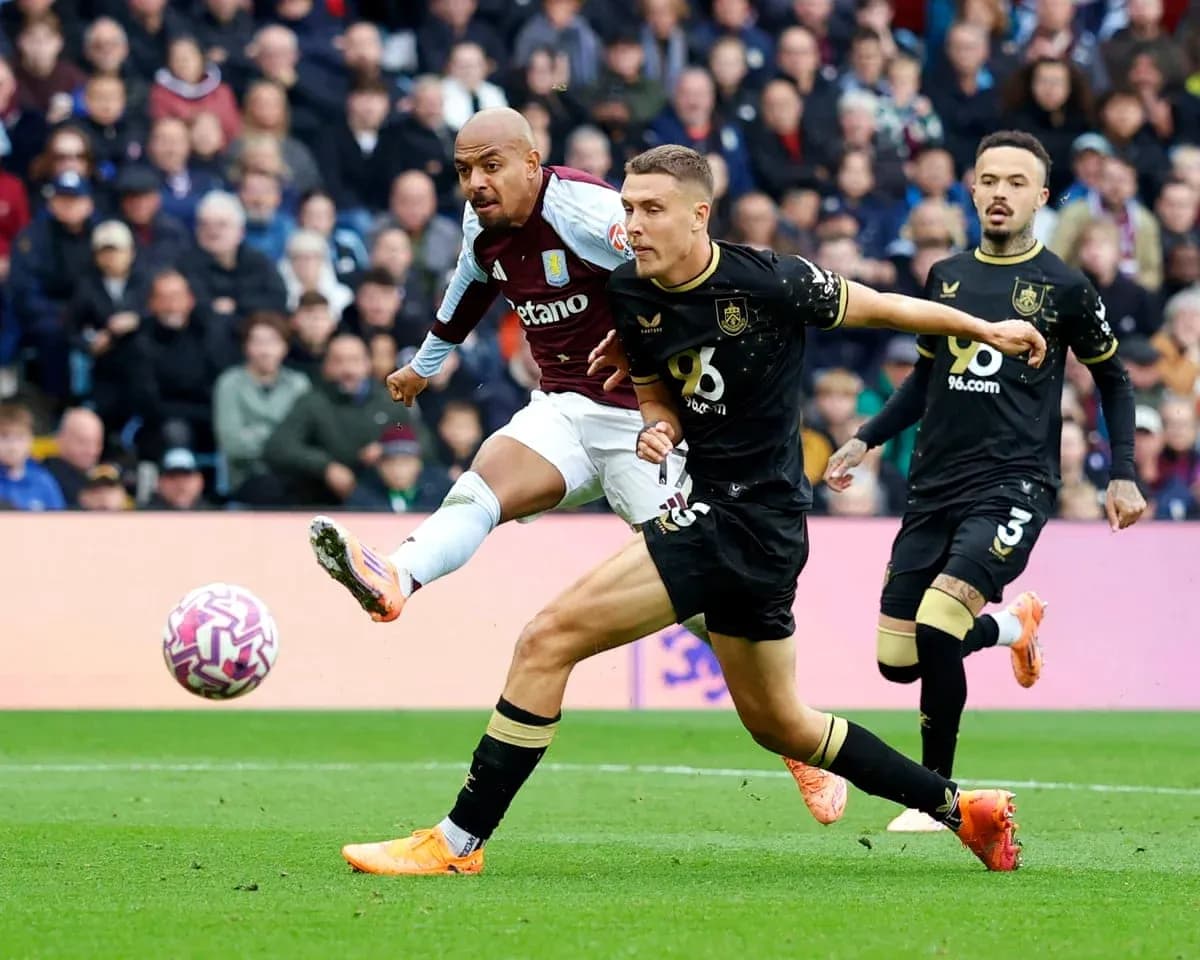
Burnley host Aston Villa at Turf Moor in a late-season Premier League fixture in 2026 that carries very different stakes for each side. In the league phase, Burnley sit 19th on 20 points with a -36 goal difference after 35 matches (35 goals for, 71 against), locked in the relegation places and running out of time to escape. Aston Villa arrive 5th on 58 points with a +4 goal difference (48 goals for, 44 against) in 35 games, still firmly in the hunt for Champions League qualification. With only three rounds left, this match is season-defining: survival lifeline for Burnley versus a crucial step in Villa’s push to secure a Champions League league-phase spot.
Head-to-Head Tactical Summary
The recent head-to-head record tilts clearly towards Aston Villa, with Burnley struggling to contain Villa’s attack both home and away.
On 5 October 2025 at Villa Park in the Premier League (Regular Season - 7), Aston Villa beat Burnley 2-1. Villa led 1-0 at half-time and managed the game to protect and extend that advantage before Burnley’s late response.
On 30 December 2023 at Villa Park (Premier League, Regular Season - 20), Villa again edged a high-scoring contest 3-2. The half-time score was 2-1 to Aston Villa, underlining how frequently Villa have been able to strike early against Burnley.
Earlier that 2023 Premier League year, on 27 August 2023 at Turf Moor (Regular Season - 3), Villa won 3-1 away. They established a 2-0 half-time lead and controlled the key transitions, exploiting Burnley’s defensive structure on home soil.
Going back to 2022 in the Premier League 2021 season, the sides met twice. On 19 May 2022 at Villa Park (Regular Season - 18), the match finished 1-1, with Burnley leading 1-0 at half-time before Villa found an equaliser. Just days earlier, on 7 May 2022 at Turf Moor (Regular Season - 36), Aston Villa had recorded another 3-1 away win, again going 2-0 up by half-time.
Across these five fixtures, Aston Villa have three wins (3-1 at Turf Moor in 2022, 3-1 at Turf Moor in 2023, 3-2 and 2-1 at Villa Park in 2023 and 2025) and one draw, with Burnley’s only positive result the 1-1 at Villa Park in May 2022. The recurring pattern is Villa’s ability to build half-time leads at both venues and to score at least twice in every win.
Global Season Picture
- League Phase Performance: In the league phase, Burnley’s numbers underline a fragile campaign: 19th place, 20 points from 35 matches, with 35 goals scored and 71 conceded (goal difference -36). Aston Villa, by contrast, sit 5th with 58 points from 35 games, scoring 48 and conceding 44 (goal difference +4). Burnley’s low output and heavy concession rate make this a must-win scenario, while Villa’s position keeps them in direct contention for Champions League qualification.
- All-Competition Metrics: Across all phases of the competition, Burnley average 1.0 goals for and 2.0 goals against per match (35 scored, 71 conceded over 35 games), reflecting a consistently vulnerable defense and limited attacking edge. Their clean-sheet count is low at 4 in total, and they have failed to score 13 times, suggesting long stretches where they struggle to create and convert. Aston Villa, across all phases of the competition, average 1.4 goals for and 1.3 goals against per match (48 scored, 44 conceded in 35 games), with 9 clean sheets and 10 matches without scoring. Villa’s profile is more balanced: a functional attack with a defense that concedes but not at the extreme levels Burnley face. Card data across all phases shows Burnley accumulating yellow cards heavily in the 16–30 and 76–90 minute ranges, while Villa see a spike in yellows between 46–60 minutes. Burnley’s multiple red-card incidents across late halves contrast with Villa’s single red in the 61–75 window, hinting at Burnley’s discipline issues when chasing games.
- Form Trajectory: In the league phase, Burnley’s current form line is “LLLLL”, indicating five straight defeats. This points to a downward trajectory with no recent momentum, intensifying the pressure on this fixture as potentially decisive for relegation. Aston Villa’s league-phase form string “LLWDW” shows inconsistency but with two wins in the last three. After back-to-back losses, Villa have stabilised with a draw and two wins, enough to keep them in the Champions League conversation but leaving little margin for error in the run-in.
Tactical Efficiency
Without explicit numeric attack/defense indices from the comparison block, the best proxy comes from the season-long averages across all phases of the competition.
Burnley’s attack is low-yield (1.0 goals per match) and highly volatile: they have failed to score in 13 of 35 games and have only managed four wins in total. Their defense is clearly exposed (2.0 goals conceded per match), with just 4 clean sheets and heavy away concessions (2.5 goals against per away game). This combination points to a low tactical efficiency at both ends: they neither suppress opposition chances effectively nor consistently generate enough attacking volume to compensate.
Aston Villa’s profile is more efficient. Across all phases, they score 1.4 goals per match and concede 1.3. The attack is not explosive but reliable enough, supported by 9 clean sheets that show a defense capable of controlling matches when structurally sound. Their use of a stable 4-2-3-1 in 31 of 35 matches suggests a clear tactical identity, which aligns with their ability to maintain a positive goal difference and a high win count (17 from 35).
Comparatively, Villa convert their structural stability into points far more effectively than Burnley, whose frequent formation changes and disciplinary issues undermine any defensive platform. Given the head-to-head pattern of Villa repeatedly establishing early multi-goal leads at Turf Moor and Villa Park, the underlying efficiency gap is likely to persist unless Burnley can dramatically tighten their defensive shape and discipline in this match.
The Verdict: Seasonal Impact
From a seasonal perspective, this fixture is close to a last stand for Burnley and a leverage point for Aston Villa’s Champions League ambitions.
For Burnley, stuck on 20 points with a -36 goal difference in the league phase and on a five-game losing streak, anything short of a win keeps them heavily odds-on for relegation. A victory would not only add three crucial points but also provide a psychological reset against an opponent that has dominated them recently. It would narrow the gap to safety and inject belief before the final two rounds. A draw would be of limited use given their current position and goal difference; a defeat would almost certainly confirm a return to the Championship in 2026, making the remaining fixtures largely academic.
For Aston Villa, starting this round 5th with 58 points, this is the type of away game they must capitalise on to secure Champions League league-phase football. Three points would push them closer to or potentially into the top four, depending on rivals’ results, and maintain control of their destiny. Dropped points against a relegation-threatened side with Burnley’s defensive record would increase pressure in the final two matches and might force Villa to chase more difficult results against stronger opponents.
Strategically, the match is set up as a clash between necessity and quality: Burnley’s desperation to extend their Premier League stay versus Villa’s higher tactical efficiency and superior league-phase record. The most likely seasonal outcome is binary: a Villa win consolidates their Champions League push and effectively seals Burnley’s relegation, while a Burnley upset would reopen the relegation battle and inject uncertainty into the race for the top four heading into the final fortnight of the 2026 calendar year.
Related News

Premier League Managers Facing Potential Sackings During International Break

Arsenal's Myles Lewis-Skelly Names Unexpected Tottenham Rival as Toughest Premier League Opponent

Three Premier League Players Shining Early This Season

Premier League Early Season Reactions: Man City’s Strength, Arsenal’s Flaws, United’s Struggles

Premier League Returns October 10 After Extended September-October International Break

Fulham and Manchester United Share Points in 1-1 Draw