
Chelsea's Premier League Crossroads: A 3-1 Defeat to Nottingham Forest
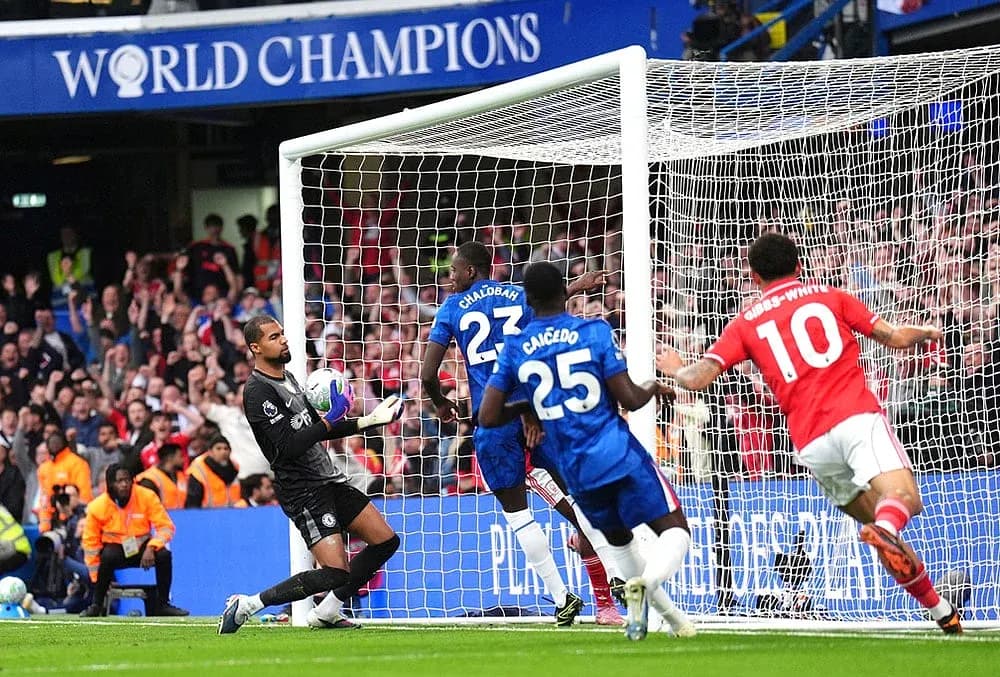
Under the grey London sky at Stamford Bridge, a season’s worth of tension seemed to compress into ninety bruising minutes. Following this result, a 3-1 home defeat to Nottingham Forest, Chelsea’s Premier League campaign reaches a crossroads: ninth in the table on 48 points, with a goal difference of 6 (54 scored, 48 conceded), and a form line that now reads like a warning siren – “LLLLL”. Forest, meanwhile, climb to 16th with 42 points, their goal difference at -2 (44 for, 46 against), riding a wave of “WWWDW” resilience that now includes a statement win on their travels in West London.
I. The Big Picture – Identities Colliding
The contrast in seasonal DNA was etched into the formations. Chelsea stayed loyal to their 4-2-3-1, a structure they have used in 30 league games, with R. Sanchez behind a back four of M. Gusto, T. Chalobah, T. Adarabioyo and Marc Cucurella. In front, the double pivot of R. Lavia and M. Caicedo anchored an attacking line of C. Palmer, E. Fernandez and J. Derry, feeding Joao Pedro as the lone forward.
Forest, usually a 4-2-3-1 side themselves this season, came to Stamford Bridge in a more old-school 4-4-2. M. Sels stood behind a back line of Z. Abbott, Cunha, Morato and L. Netz, with a flat midfield of D. Bakwa, R. Yates, N. Dominguez and J. McAtee supporting the front pair of Igor Jesus and T. Awoniyi. On their travels this campaign, Forest had already scored 26 goals at an average of 1.4 per game, and they leaned into that away-day edge with a direct, dual-striker threat that Chelsea never truly solved.
Chelsea’s numbers tell a different story: at home they have scored 24 goals in 18 matches, averaging 1.3, while conceding 24 at exactly 1.3 per game. That balance hints at a side that can trade blows but rarely control the ring. Against a Forest team conceding 1.4 away and scoring at 1.4, the margins were always going to be thin. Forest simply managed those margins better.
II. Tactical Voids – Absences and Discipline
Both squads arrived with important absences that shaped the texture of the contest.
Chelsea were without M. Mudryk (suspended), the vertical runner who often stretches defences and creates space for Joao Pedro and C. Palmer between the lines. The absence of wide, raw pace forced Calum McFarlane to lean more heavily on technical combinations through Palmer and Fernandez, with J. Derry asked to provide energy rather than pure penetration. Further attacking depth was blunted by the unavailability of A. Garnacho and P. Neto (both listed as inactive), and the creative spark of J. Gittens, sidelined by muscle injury. The double listing of an unnamed hamstring injury further underlined how thin Chelsea’s options have become in certain zones.
Forest’s list was longer but more structurally focused. O. Aina, W. Boly, Murillo and N. Savona were all out, stripping Vitor Pereira of both full-back versatility and central defensive rotation. C. Hudson-Odoi’s injury removed a transition threat on the flank, while John Victor, D. Ndoye and I. Sangare were also missing, limiting options in both boxes and in the holding role. Yet Forest compensated with cohesion: the starting back four and double pivot understood the game plan and executed it with discipline.
That discipline has been a season-long theme. Forest’s card profile shows yellow cards clustering between 46-60 minutes and 61-75 minutes (23.21% in each band), a sign of a team that tackles aggressively in the heart of the contest but rarely loses its head late. They have only one red card in the league, and it arrived in the 31-45 range, a reminder that the emotional edge can still flare, but did not here.
Chelsea’s card map is more volatile. Their yellow cards peak in the 76-90 window at 22.35%, and they have red cards spread across almost every 15-minute block from 0-75, with a late-game spike (28.57%) in the 61-75 period. M. Caicedo embodies that edge: 10 yellows and 1 red this season, yet also 83 tackles, 14 blocked shots and 56 interceptions. In a match that slipped away early, his aggression risked turning into desperation.
III. Key Matchups – Hunter vs Shield, Engine Room vs Enforcer
The headline duel was always going to be Joao Pedro against Forest’s defensive shield. Overall this campaign, Chelsea average 1.5 goals per game, with Joao Pedro responsible for 15 of their 54 league strikes and adding 5 assists. He has taken 48 shots, 28 on target, and created 29 key passes. He is not just a finisher; he is Chelsea’s creative and scoring hub.
Forest’s defensive record – 46 conceded overall, 25 away at an average of 1.4 – suggested vulnerability, but their structure at Stamford Bridge was clear: keep the box crowded, deny Joao Pedro clean touches between the lines, and trust the centre-back pair Morato–Cunha to win duels. Morato, in particular, played the role of physical enforcer, stepping out to meet Pedro early and forcing him to receive with his back to goal rather than running onto passes from Palmer and Fernandez.
In the opposite direction, the “Hunter vs Shield” dynamic was inverted. Forest’s away scoring average of 1.4 goals per game met a Chelsea back line that concedes 1.3 at home. T. Chalobah, usually composed (93% pass accuracy, 16 blocked shots this season), found himself dragged into uncomfortable channels by the twin movement of Igor Jesus and T. Awoniyi. With Lavia and Caicedo occupied by Forest’s midfield four, Chelsea’s centre-backs were often exposed to early balls into the channels, especially down the sides of Cucurella and Gusto.
The “Engine Room” battle was equally decisive. For Chelsea, Caicedo and Lavia were tasked with setting the rhythm and protecting transitions. Caicedo’s 1,877 passes at 92% accuracy and his 278 duels (154 won) highlight his importance as both metronome and destroyer. Yet Forest’s axis of R. Yates and N. Dominguez, backed by the intelligence of J. McAtee drifting inside, disrupted Chelsea’s build-up. They pressed selectively, forcing Sanchez and the centre-backs into longer passes that bypassed Fernandez and Palmer.
On the Forest side, the creative spark that often comes from M. Gibbs-White (13 goals, 4 assists, 46 key passes this season) was kept in reserve on the bench. His presence among the substitutes gave Pereira a late-game option to tilt the midfield battle further if needed, but Forest’s early control on the scoreboard allowed them to manage his minutes and preserve structural solidity.
IV. Statistical Prognosis – What This Result Tells Us
Following this result, the numbers paint a stark picture for Chelsea. Overall they score 1.5 and concede 1.4 per game, yet their home record – 6 wins, 5 draws, 7 defeats – underlines a side that cannot reliably turn Stamford Bridge into a fortress. Nine clean sheets overall are offset by seven matches in which they have failed to score. The penalty record (7 from 7, 100.00% overall, with no misses) shows composure from the spot, but they are not reaching the box often enough in control to exploit it.
Forest, by contrast, look like a side built for the road. Seven away wins from 18, 26 goals scored, and five away clean sheets reflect a team that can sit in, suffer and strike. Their overall failure-to-score tally (14 matches) suggests they can still be blunted, but when the game state suits them – as it did here, with an early 2-0 half-time lead – they are ruthless in managing space and tempo.
In xG terms, the profiles suggest that in a neutral rematch Chelsea would probably edge territory and shot volume, but Forest’s clarity in transition and their twin-striker set-up would continue to generate high-quality chances. Chelsea’s late-game card spike (22.35% of yellows in the final 15 minutes) hints at a team that chases games rather than controls them, and that emotional tilt often erodes defensive structure just as Forest’s away threat peaks.
The tactical verdict: Chelsea remain a side with a high ceiling in possession, anchored by the creative and scoring gravity of Joao Pedro and the defensive industry of Caicedo and Chalobah. But until they reconcile their aggressive midfield profile with a more controlled late-game temperament, fixtures like this will continue to slip away. Forest, meanwhile, emerge from Stamford Bridge with their identity sharpened: compact, ruthless on transitions, and increasingly comfortable turning hostile venues into platforms for survival and, occasionally, statement victories.
Related News

Premier League Managers Facing Potential Sackings During International Break

Arsenal's Myles Lewis-Skelly Names Unexpected Tottenham Rival as Toughest Premier League Opponent

Three Premier League Players Shining Early This Season

Premier League Early Season Reactions: Man City’s Strength, Arsenal’s Flaws, United’s Struggles

Premier League Returns October 10 After Extended September-October International Break

Fulham and Manchester United Share Points in 1-1 Draw