
Crystal Palace vs Everton: Mid-Table Clash at Selhurst Park
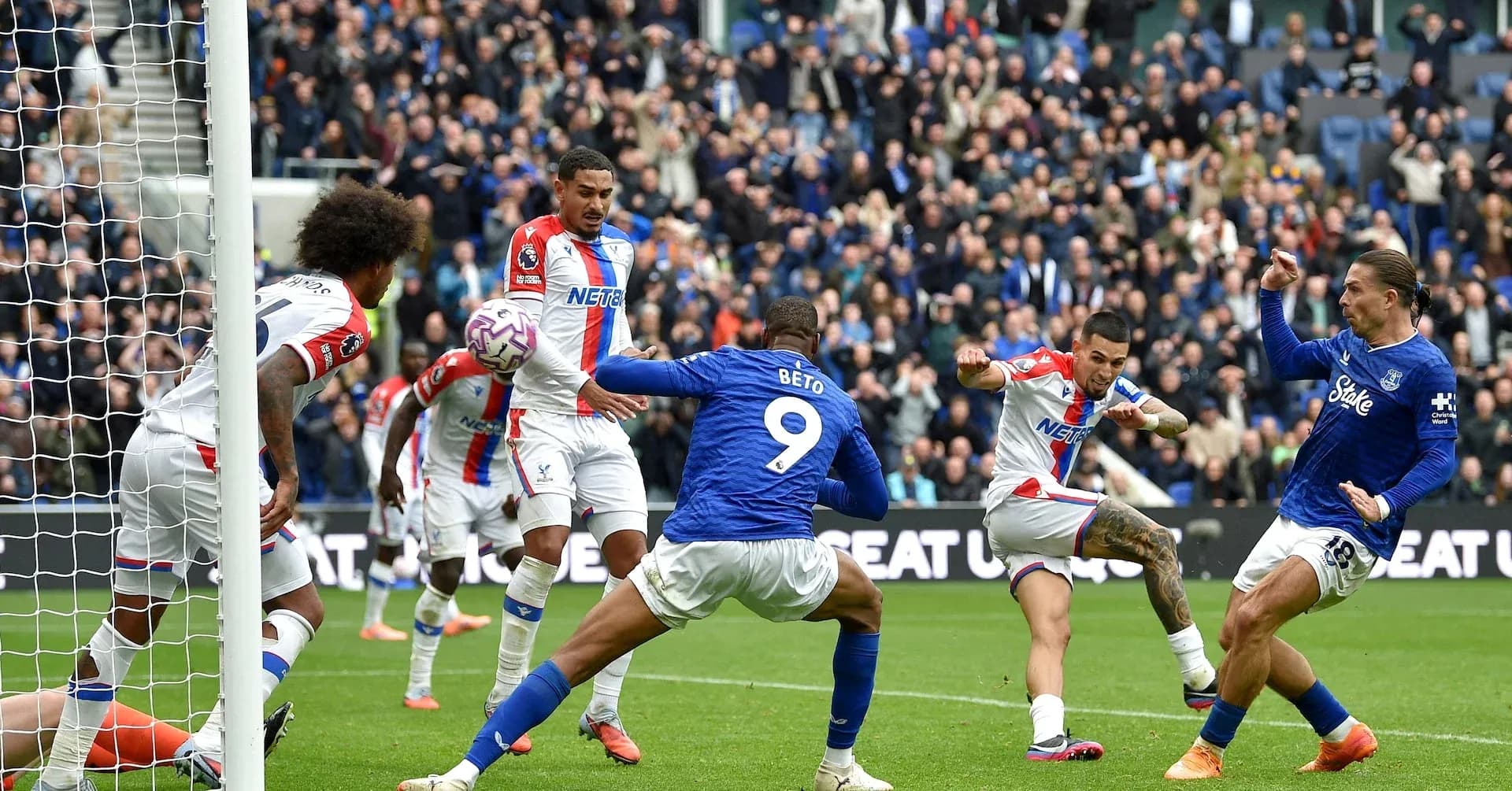
Selhurst Park stages a mid-table chess match on 10 May 2026, as 15th-placed Crystal Palace host 10th-placed Everton in the Premier League. With three games left for Palace and two for Everton, the stakes are different but real: Palace are close to mathematical safety and chasing a calmer finish, while Everton are within touching distance of the top half and a potentially more lucrative final position.
Context and stakes
In the league, Crystal Palace sit 15th on 43 points with a goal difference of -6 (36 scored, 42 conceded) from 34 matches. Their recent form reads “LLDWD”, a wobble after a previously steady run, and their home record is cautious rather than convincing: 4 wins, 8 draws, 5 defeats at Selhurst Park, with just 16 goals scored and 19 conceded.
Everton arrive in 10th on 48 points, exactly level on goals for and against (44-44) from 35 matches. Their form line “DLLDW” shows inconsistency but enough resilience to stay in the top half. Away from home they have been quietly solid: 7 wins, 4 draws, 6 defeats, scoring 19 and conceding 20.
For Palace, three points would likely end any lingering anxiety and could move them closer to mid-table respectability. For Everton, a win would strengthen their grip on a top-half finish and keep them in the conversation to climb higher in the final weeks.
Tactical landscape: Palace’s back three vs Everton’s 4-2-3-1
Across all phases, Crystal Palace have been structurally stable under a back-three system. They have lined up 30 times in a 3-4-2-1 and 4 times in a 3-4-3 this season. That shape underpins a conservative attacking profile: 36 goals in 34 league games (1.1 per match), with only 16 at home (0.9 per match). They have, however, been reasonably robust without the ball, conceding 42 (1.2 per match) and keeping 12 clean sheets across all phases (7 at home).
The flip side is their attacking volatility: Palace have failed to score in 11 league games overall, including 7 at Selhurst Park. That hints at long spells where their build-up can stall, especially if opponents sit in and protect central areas.
Everton, by contrast, are more conventional in shape. They have used a 4-2-3-1 in 21 matches and a 4-3-3 once this season. Their attacking output is similar in volume to Palace’s (44 goals in 35 games, 1.3 per match) but more balanced between home and away: 25 at Goodison Park, 19 on their travels. Defensively they mirror that balance, conceding 24 at home and 20 away.
Both sides’ goal profiles suggest fine margins rather than chaos. Palace’s biggest home win is 2-0, and their heaviest home defeat 0-3. Everton’s biggest away win is 0-2, their worst away loss 2-0. These extremes underline a tendency for relatively low-scoring, controlled contests rather than wide-open shootouts.
Discipline could be a subtle factor. Palace’s yellow cards are spread across all phases of the game, with noticeable spikes between 31-45 and 46-60 minutes. Everton’s bookings skew later, with the heaviest concentration from 46-90 minutes, suggesting intensity – and possibly fatigue – rising as matches wear on. Both sides have shown red cards this season, so the management of transitions and tactical fouls in midfield will matter.
Key players and attacking threats
Jean-Philippe Mateta stands out as Palace’s primary attacking reference. Across all phases in the league, he has 10 goals from 28 appearances (24 starts), with 53 shots and 30 on target. His physical profile – 192 cm, 88 kg – and volume of duels (274 contested, 104 won) underline his role as a central focal point, both for direct balls and for pinning centre-backs.
Mateta’s penalty record this season is precise: 4 scored, 0 missed. Combined with Palace’s team penalty data (7 scored from 7), he is a reliable source of high-quality chances when they can generate pressure in the box. For a side that often creates in bursts rather than waves, set-pieces and penalties are a critical component of their scoring threat.
Around him, Palace’s 3-4-2-1 typically relies on the “2” behind the striker and the wing-backs to provide creativity and width. However, their injury list strips away some of that flexibility:
- C. Doucoure – Missing Fixture (knee injury)
- E. Guessand – Missing Fixture (knee injury)
- E. Nketiah – Missing Fixture (thigh injury)
- B. Sosa – Missing Fixture (injury)
Doucoure’s absence affects midfield bite and ball-winning, while Nketiah and Guessand remove alternative profiles in attack. Sosa’s unavailability limits options at wing-back or full-back. The net effect is a narrower rotation and more responsibility on the established starters to carry the creative load.
Everton’s attack is more committee-based statistically, but structurally they have a clear framework: a lone striker supported by a line of three, with full-backs encouraged to advance when the double pivot offers cover. Their away record of 19 goals in 17 games (1.1 per match) is modest yet consistent, and they have failed to score in only 5 away fixtures.
They also have a clean penalty record this season (2 scored, 0 missed), which adds another edge in tight matches. However, they will be without two significant players:
- J. Branthwaite – Missing Fixture (hamstring injury)
- J. Grealish – Missing Fixture (foot injury)
Branthwaite’s absence removes a key piece of the defensive unit, both aerially and in build-up. Grealish’s unavailability deprives Everton of a ball-carrying and chance-creating presence between the lines. In midfield, there is additional uncertainty:
- I. Gueye – Questionable (injury)
- T. Iroegbunam – Questionable (injury)
If Gueye is unavailable or not fully fit, Everton may lose some of their screening and pressing intensity in front of the back four, which could open spaces for Palace’s attacking midfielders to operate between the lines.
Head-to-head: Everton edge the recent series
The recent competitive head-to-head record tilts clearly towards Everton. Looking at the last five meetings (excluding friendlies):
- 05 October 2025, Premier League, Hill Dickinson Stadium: Everton 2-1 Crystal Palace – Everton win.
- 15 February 2025, Premier League, Selhurst Park: Crystal Palace 1-2 Everton – Everton win.
- 28 September 2024, Premier League, Goodison Park: Everton 2-1 Crystal Palace – Everton win.
- 19 February 2024, Premier League, Goodison Park: Everton 1-1 Crystal Palace – Draw.
- 17 January 2024, FA Cup 3rd Round Replay, Goodison Park: Everton 1-0 Crystal Palace – Everton win.
Over these five games, Everton have 4 wins, Crystal Palace have 0, and there has been 1 draw. Notably, Palace have lost their last two home league meetings with Everton by the same 1-2 scoreline.
Patterns and possible game script
Statistically, this fixture points towards a tight, low-to-mid scoring contest:
- Palace at home: 16 scored, 19 conceded in 17 matches, 7 clean sheets, 7 times failed to score.
- Everton away: 19 scored, 20 conceded in 17 matches, 5 clean sheets, 5 times failed to score.
Both sides average just above 1 goal for and around 1.2–1.3 against per match in their respective home/away splits, which supports the expectation of a one-goal margin either way or a draw.
Palace’s best route lies in leveraging Mateta’s presence against an Everton back line missing Branthwaite, using crosses and set-pieces, and exploiting any midfield gaps if Gueye does not start. Their 3-4-2-1 can create overloads in the half-spaces if the wing-backs are aggressive.
Everton, for their part, will likely trust their 4-2-3-1 structure, look to control territory through the double pivot, and target Palace’s occasional attacking bluntness at home. Their away record of 7 wins suggests they are comfortable in games where they can be compact and strike in moments rather than dominate for 90 minutes.
Discipline and game management in the middle third will be crucial. Both teams have shown a tendency to pick up cards in the second half, and with injuries trimming options, neither manager will want to be forced into early, unplanned substitutions.
The verdict
Data and context point to a finely balanced meeting with a slight statistical edge to Everton. They are higher in the league, have the stronger recent head-to-head record (4 wins and 1 draw in the last 5 competitive games), and are a proven away side with 7 victories on the road.
However, Palace’s defensive resilience at Selhurst Park, their 7 home clean sheets, and the individual form of Jean-Philippe Mateta – especially from the penalty spot – give them a genuine platform to disrupt that pattern.
Expect a cautious opening, a match likely decided by small details in both boxes, and a result that stays within a one-goal margin. A draw or a narrow win either way fits the statistical profile, with Everton’s recent dominance of the fixture weighed against Palace’s home solidity and the urgency of securing a stress-free end to their season.
Related News

Premier League Managers Facing Potential Sackings During International Break

Arsenal's Myles Lewis-Skelly Names Unexpected Tottenham Rival as Toughest Premier League Opponent

Three Premier League Players Shining Early This Season

Premier League Early Season Reactions: Man City’s Strength, Arsenal’s Flaws, United’s Struggles

Premier League Returns October 10 After Extended September-October International Break

Fulham and Manchester United Share Points in 1-1 Draw