
Everton vs Manchester City: A Tactical Draw at Hill Dickinson Stadium
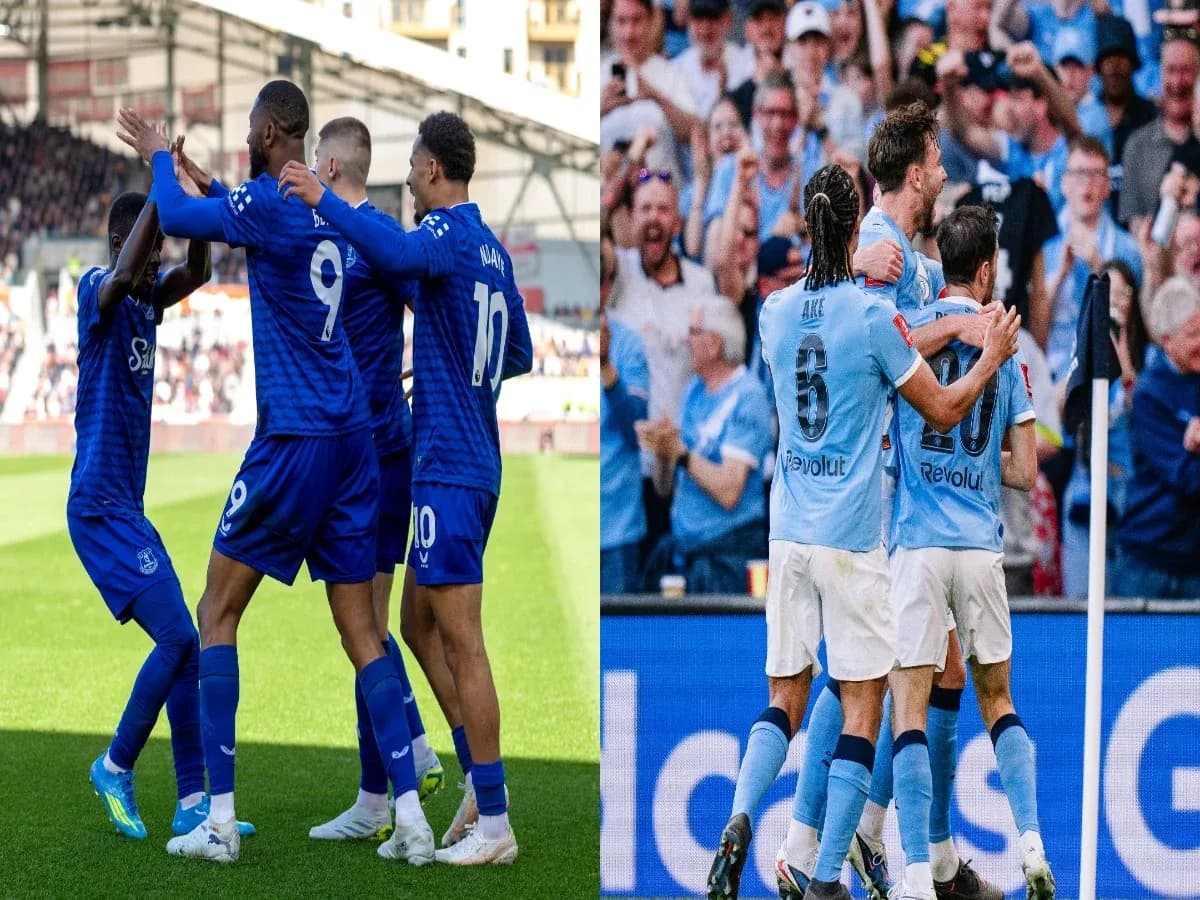
Under the lights at Hill Dickinson Stadium, a 3-3 draw between Everton and Manchester City felt less like a routine Premier League fixture and more like a tactical stress test for both squads. Following this result, the table still tells of contrasting seasons: Everton sitting 10th on 48 points with a goal difference of 0, City second on 71 points with a goal difference of 37. But over 90 minutes, those numbers blurred into a chaotic, revealing narrative.
I. The Big Picture – Structure vs Chaos
Both sides lined up in a mirrored 4-2-3-1, but the systems carried very different intentions.
Everton’s shape under Leighton Baines was pragmatic and vertical. With J. Pickford behind a back four of J. O’Brien, J. Tarkowski, M. Keane and V. Mykolenko, the home side leaned on compact spacing and direct transitions. The double pivot of T. Iroegbunam and J. Garner formed the hinge: one to destroy, one to distribute. Ahead of them, M. Rohl, K. Dewsbury-Hall and I. Ndiaye floated behind Beto, tasked with turning broken City attacks into fast, central counters.
Manchester City, even in a 4-2-3-1, carried the familiar Guardiola imprint: positional discipline, width through J. Doku and A. Semenyo, and a central overload built around B. Silva and R. Cherki. With G. Donnarumma in goal and a back line of M. Nunes, A. Khusanov, M. Guehi and N. O’Reilly, City tried to compress the game into Everton’s half, trusting their structure and technical superiority.
Seasonally, the identities were clear heading into this game. Everton, with 13 wins, 9 draws and 13 defeats from 35 matches, have been the archetypal mid-table knife-edge team: 44 goals scored, 44 conceded overall, averaging 1.3 goals for and 1.3 against per match. At home, they average 1.4 goals scored and 1.3 conceded, a profile of narrow margins. City, by contrast, arrived as a machine: 21 wins from 34, 69 goals scored and 32 conceded overall, averaging 2.0 goals for and 0.9 against. Away, they still look elite, with 31 goals scored and 20 conceded, averaging 1.7 for and 1.1 against on their travels.
Yet the 3-3 scoreline cut against City’s defensive parsimony and underlined Everton’s knack for dragging superior sides into messy, emotional contests.
II. Tactical Voids – Who Was Missing, What Was Lost
The absentees shaped the story before a ball was kicked.
Everton were without J. Branthwaite, I. Gueye and J. Grealish. Branthwaite’s hamstring injury removed a left-sided pillar from the back line, forcing Baines to trust the O’Brien–Tarkowski–Keane–Mykolenko unit to cope with E. Haaland and City’s rotations. Gueye’s absence stripped away a pure ball-winner from midfield, increasing the defensive load on Iroegbunam and Garner. Without Grealish’s six assists and ball-carrying control, Everton leaned more heavily on Dewsbury-Hall and Ndiaye to stitch transitions and draw fouls.
For City, the void was even more structural. R. Dias and J. Gvardiol were both missing, removing leadership, aerial dominance and progressive passing from the heart of defence. In their place, Khusanov and Guehi formed a less-tested pairing, protected by a double pivot where “Nico” and B. Silva had to balance progression with cover. The most seismic absence, though, was Rodri. Without their metronome and primary defensive screen, City’s rest defence was inherently more fragile; the 3-3 draw felt like a direct consequence of that missing anchor.
Disciplinary profiles added another layer of risk. Everton’s season-long card distribution shows a late-game edge: 22.39% of their yellow cards arrive between 76-90 minutes, and half of their red cards fall in that same period. City’s yellows also spike late, with 20.00% between 76-90 minutes. In a tight contest, the final quarter-hour was always likely to become stretched and combustible, and this match followed that emotional script.
III. Key Matchups – Hunter vs Shield, Engine Room vs Chaos
Hunter vs Shield was written in bold: E. Haaland, the league’s top scorer with 25 goals, against an Everton defence that, overall, concedes 1.3 goals per match and has kept 11 clean sheets. Haaland’s season profile is ruthless: 96 total shots, 54 on target, 3 penalties scored but 1 missed, 22 key passes and 7 assists. He is not just a finisher but a gravity well, constantly distorting defensive shapes.
Everton’s response was collective. Tarkowski and Keane wrestled with Haaland’s physicality, while O’Brien – who has blocked 16 shots this season – stepped in aggressively from the right. Mykolenko’s positioning had to be near-perfect to prevent Doku’s wide isolations from simply feeding Haaland at the near post. The fact that City still scored three underlined the sheer difficulty of the assignment, but Everton’s resilience in hitting back three times spoke to a defensive unit that, while not watertight, is hardened by repetition.
In the Engine Room, the duel was subtler but just as decisive. J. Garner, one of the league’s top assist providers with 7, is Everton’s organiser and disruptor: 1,617 passes at 86% accuracy, 49 key passes, 113 tackles, 9 blocked shots and 53 interceptions, but also 10 yellow cards. His job against City’s central carousel was brutal: step into passing lanes, screen Haaland, and still find the vertical balls to release Beto and the trio behind him.
Opposite him, B. Silva and R. Cherki formed City’s creative brain. Bernardo’s 1,952 passes at 90% accuracy and 45 key passes make him the rhythm-setter, while Cherki, with 11 assists, 57 key passes and 97 dribble attempts (46 successful), is the line-breaker. Their interplay between Everton’s lines repeatedly dragged Iroegbunam and Garner out of shape, but every turnover opened the pitch for Everton’s counters. The match became a tug-of-war between City’s desire to compress space and Everton’s insistence on stretching it vertically.
Out wide, J. Doku’s duel with O’Brien and Garner was electric. With 132 dribble attempts and 74 successes this season, Doku is City’s chaos agent, also having won 2 penalties. Each 1v1 forced Everton’s back line to choose between stepping out and risking the channel for Haaland, or dropping and conceding territory.
IV. Statistical Prognosis – xG, Margins and What This Draw Says
Even without explicit xG numbers, the statistical context frames this 3-3 as an outlier leaning towards Everton’s overperformance and City’s underperformance in defensive terms. City’s overall average of 0.9 goals conceded per match and 1.1 on their travels was shattered here; conceding three to an Everton side that usually scores 1.4 at home suggests the hosts either finished at a near-clinical level or City’s makeshift defensive structure, without Dias, Gvardiol and Rodri, bled high-quality chances.
Everton, whose overall goal difference is 0 across 35 games, matched a side with a goal difference of 37 punch for punch. Their 11 clean sheets and 9 matches failing to score tell of a team usually defined by extremes; this game compressed both identities into one night: porous at times, but fearless and incisive when chances appeared.
Following this result, the tactical verdict is nuanced. City’s attacking metrics – 69 goals overall, 2.0 per match – remain title-calibre, especially with Haaland and Cherki in this form. But their reliance on a full-strength defensive spine is stark; remove Dias, Gvardiol and Rodri, and the structure creaks. Everton, meanwhile, look increasingly like a side whose mid-table status undersells their capacity to hurt elite opponents, especially at home.
If this match were replayed ten times with similar shot volumes, the underlying numbers would probably tilt City’s way. Yet football lives in the tension between xG and execution. On this night, Everton’s courage, Garner’s engine, and Beto’s presence turned a statistical mismatch into a statement draw – and a reminder that even the most finely tuned machine can be dragged into a street fight it does not entirely control.
Related News
Premier League Managers Facing Potential Sackings During International Break
Arsenal's Myles Lewis-Skelly Names Unexpected Tottenham Rival as Toughest Premier League Opponent
Three Premier League Players Shining Early This Season
Premier League Early Season Reactions: Man City’s Strength, Arsenal’s Flaws, United’s Struggles

Premier League Returns October 10 After Extended September-October International Break

Fulham and Manchester United Share Points in 1-1 Draw