
FIFA Clears VAR Official Evans After Controversial Gesture
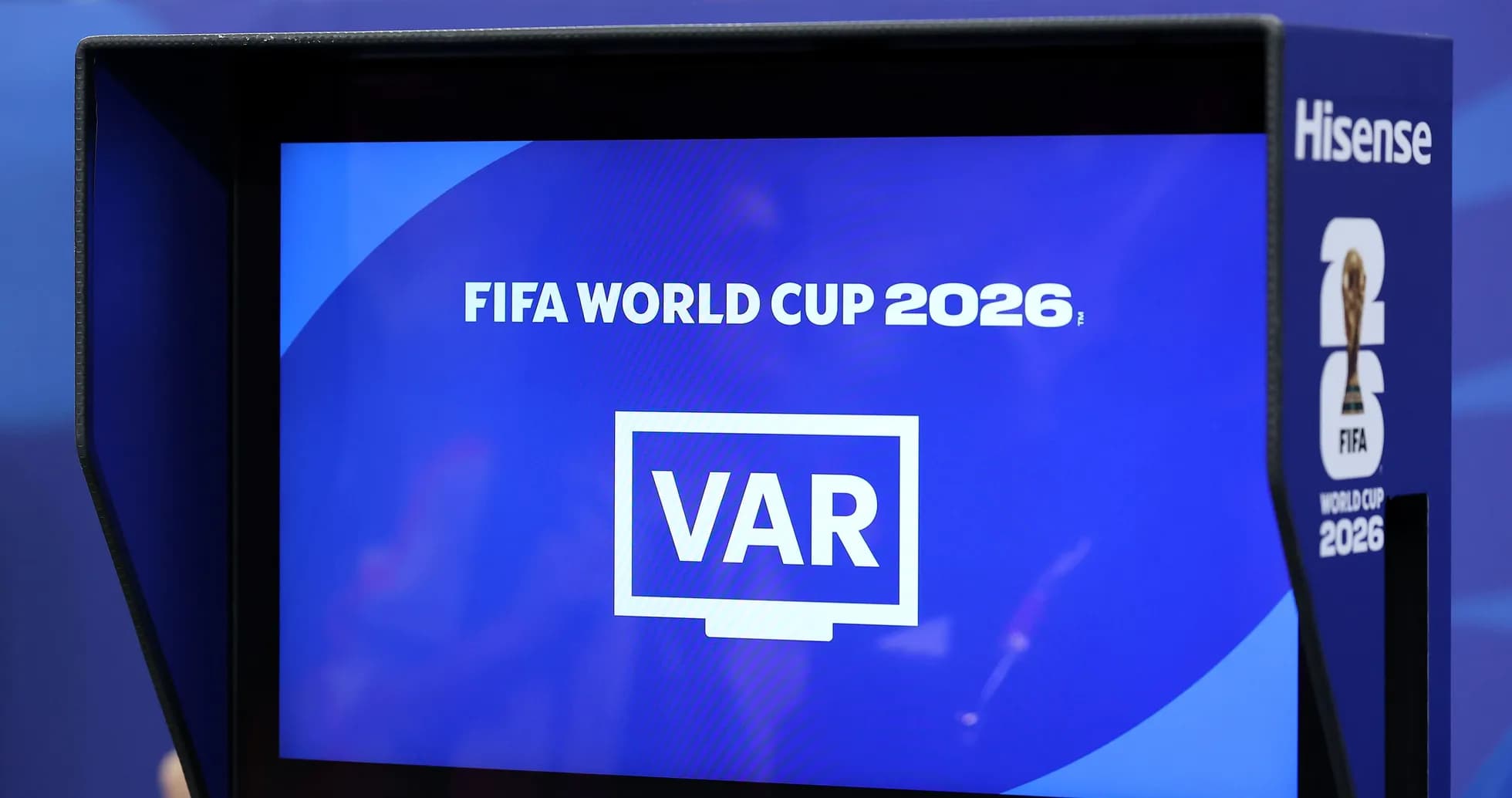
FIFA has cleared Australian VAR official Evans of wrongdoing after a hand gesture caught on the global broadcast before Germany’s 7-1 win over Curacao at the World Cup triggered a wave of controversy.
The incident unfolded in the calm before kick-off, with cameras cutting to the referees’ centre in Dallas. As Evans appeared on screen, he was seen forming an upside-down “OK” sign with his right hand. It lasted only a moment, but in the social media age, a moment is enough.
Clips of the gesture spread quickly. Some viewers dismissed it as a harmless, almost childish prank. Others saw something far more serious: a symbol that, in recent years, has been adopted by white supremacist groups and catalogued by the Anti-Defamation League in its database of hate symbols.
Under pressure to respond, FIFA launched a review, going back through footage from the referees’ hub in Dallas. After examining the material, world football’s governing body concluded there was no breach of the FIFA Disciplinary Code and confirmed that Evans would remain part of the tournament’s officiating team.
Evans, 38, did not wait for the noise to die down. He pushed back strongly, insisting there was no intent and no message behind the movement.
“The coverage following this incident simply does not reflect who I am,” he said in a statement. “Of course, I understand how the gesture has been interpreted and I regret this, however I want to be very clear and categorically say that I did not knowingly or deliberately make the hand symbol suggested.”
He went further, describing it as an unconscious tic rather than a calculated act. Images from later in the match, he pointed out, showed him repeating the same motion several times while holding a pen between his fingers.
For a referee, whose every decision is dissected in slow motion, the idea that an idle hand movement could overshadow a World Cup appointment cuts deep.
“Officiating at the World Cup is the biggest honour of my career and I look forward to supporting my colleagues for the rest of the tournament,” Evans added.
The reaction beyond FIFA told its own story about the modern game and the culture around it. Anti-discrimination groups, long attuned to coded gestures and symbols, reacted with concern. Fare, an organisation that works with both FIFA and UEFA on discrimination issues, publicly highlighted the potential meaning of what viewers had seen.
“Advice from our experts is that the gesture used clearly resembles an upside down ‘OK’ hand symbol used as a ‘white power’ symbol in global far-right circles,” Fare said, before FIFA delivered its verdict.
That context mattered. The “OK” sign, once little more than a throwaway gesture, was co-opted by extremist groups and pushed online as a trolling tactic, muddying the water between joke and genuine hate. By 2019, the Anti-Defamation League had added it to its list of hate symbols, acknowledging how it had been weaponised.
So a split-second movement on a broadcast from Dallas became a flashpoint at a World Cup thousands of miles away. FIFA’s investigation has drawn a line under Evans’ case. It has not, and will not, end the scrutiny on every frame of the global game.
Related News

Anthony Joshua Names Murat Gassiev as Next Opponent if He Defeats Tyson Fury

UFC 332: Start Time and Fight Highlights for Natalia Silva vs. Wang Cong
Court McGee Opens Up About Choosing UFC 332 as His Final MMA Fight
WBC Orders Lightweight Title Unification: William Zepeda vs Jadier Herrera

BCCI Pension List: Monthly Payments to Retired Indian Cricketers in 2025

Why Fury vs Joshua Is Set for Cardiff, and Dua Lipa’s Unexpected Role