
Sunderland vs Manchester United: Premier League Clash Preview
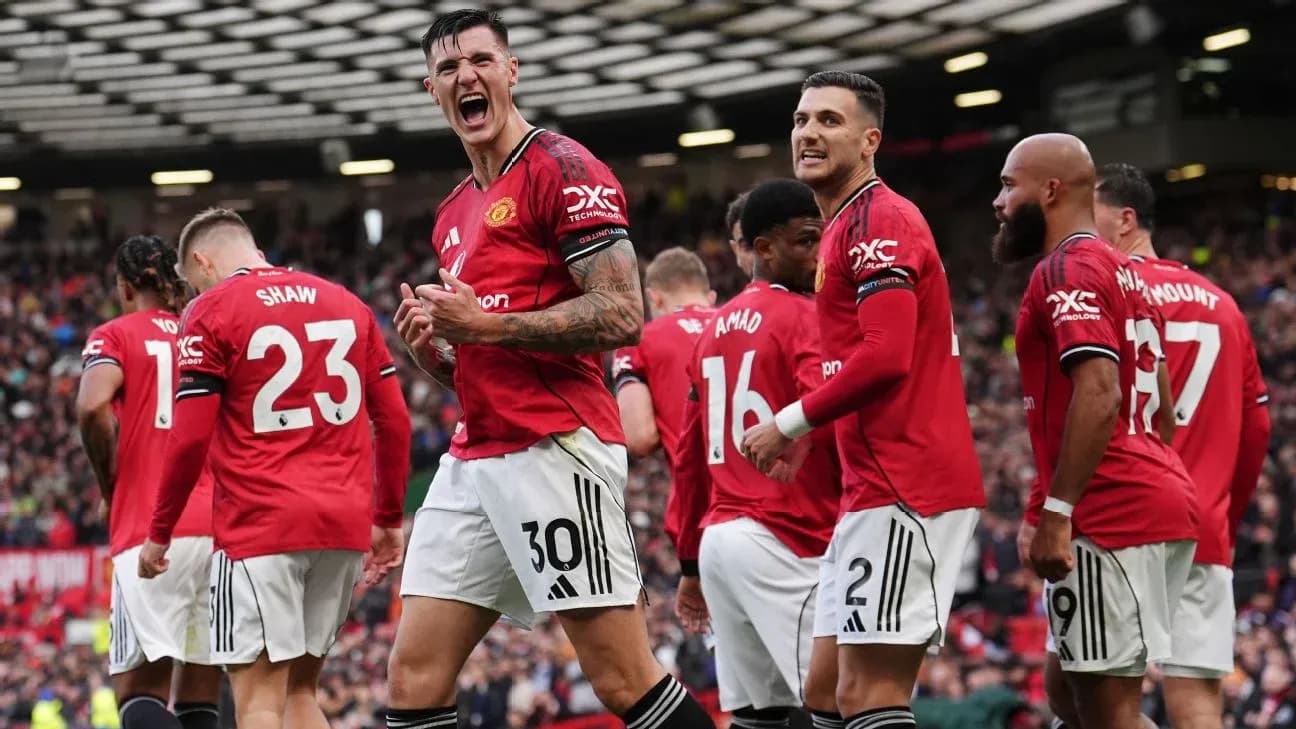
On 9 May 2026, the Stadium of Light stages a Premier League fixture that means very different things to each camp. Sunderland, 12th in the league with 47 points and a -9 goal difference across all phases, are close to securing a solid mid-table finish in their first season back among the elite. Manchester United arrive on Wearside sitting 3rd with 64 points and a +15 goal difference, locked in a tight battle to seal Champions League qualification.
With three games left in the regular season, the stakes are clear. Sunderland can effectively rubber-stamp safety and push for a top-half finish. United, meanwhile, cannot afford many slips with rivals close behind in the race for the top four.
Tactical landscape and team form
Sunderland’s season profile suggests a side that has learned to be pragmatic. In the league they have 12 wins, 11 draws and 12 defeats from 35 matches, scoring 37 and conceding 46. At home, they are notably tougher: 8 wins, 5 draws and only 4 losses from 17 games, with 23 goals scored and 19 conceded. That 23-19 record hints at tight, controlled contests rather than end-to-end chaos.
Across all phases, Sunderland’s average of 1.4 goals for and 1.1 against per home game fits that picture. They have kept 6 clean sheets at the Stadium of Light and failed to score only 4 times there, underlining a generally reliable home attack and a defence that, while not elite, is organised enough to keep games alive deep into the second half.
Tactically, the data points to a flexible but predominantly 4-2-3-1 side: that shape has been used 18 times, far more than any other. Variants like 4-3-3, 5-4-1 and 4-4-2 appear occasionally, suggesting the coach is willing to adjust for specific opponents. Against a possession-heavy side like Manchester United, a 4-2-3-1 with a double pivot to screen the back four and narrow distances between the lines feels the likeliest approach.
Manchester United, by contrast, are built to attack. Across all phases they have 18 wins, 10 draws and 7 defeats, scoring 63 and conceding 48. They average 1.8 goals per game overall and 1.6 away, with 27 goals scored and 26 conceded on their travels. That away defensive record – 26 conceded in 17 – shows vulnerability: they concede more than 1.5 per away match on average.
Form-wise, United’s league sequence reads “WWWLD” – four wins in their last five, with the only blemish a defeat followed by a draw. Sunderland’s is “DLLWW”, suggesting an upturn: back-to-back wins after a three-game winless run. So this is not a relegation struggler rolling over; Sunderland come into this with momentum and confidence.
Erik ten Hag (or the current manager) has leaned heavily on a back three: United’s most-used shape is 3-4-2-1 (18 times), with 4-2-3-1 used 17 times. Away from home, the 3-4-2-1 offers security in build-up and width from wing-backs, but it also leaves space behind those wide players if Sunderland can counter quickly into the channels.
Key players and attacking threats
The top-scorer data is heavily skewed towards Manchester United, underlining the individual quality they bring.
Benjamin Šeško leads the way for United in the league with 11 goals and 1 assist in 30 appearances. He averages more than a shot on target per game (34 on target from 51 attempts) and, at 195 cm, offers a serious aerial threat in the box. Although he has not scored from the penalty spot this season (0 penalties scored, 0 missed), his open-play output is significant. If fit – he is listed as “Questionable” with a leg injury – his presence would stretch Sunderland’s centre-backs and give United a focal point to hit early.
Around him, there is a trio on 9 league goals each:
- Bryan Mbeumo (9 goals, 3 assists) is a wide forward who combines end product with creativity, evidenced by 46 key passes and 54 total shots. His ability to drift inside from the flank could target Sunderland’s full-backs, especially if the home side’s wingers are forced deep to track United’s wing-backs.
- Casemiro, with 9 goals and 2 assists from midfield, is a major set-piece and late-arrival threat. He has taken 35 shots, with 18 on target, and his 88 tackles and 30 interceptions underline his dual role as destroyer and secondary scorer. Sunderland must be particularly alert to his movement on second balls around the box.
- Matheus Cunha (9 goals, 2 assists) is perhaps the most dynamic of the three. With 88 dribble attempts (41 successful) and 337 duels contested (155 won), he constantly looks to carry the ball through lines. He also wins plenty of fouls (51 drawn), which can tilt territory and set-piece volume in United’s favour.
Crucially, none of United’s leading scorers have penalties among their goals this season: Šeško, Mbeumo, Casemiro and Cunha all show 0 penalties scored and 0 missed, so their numbers are entirely from open play or non-penalty set pieces.
Sunderland’s top scorers are not listed in the provided data, but their season totals (37 scored in 35) indicate a more distributed attack. At home, 23 goals in 17 games is respectable; with 10 clean sheets in total, they have shown an ability to edge tight matches 1-0 or 2-1 when their structure holds.
Set pieces may be a quiet strength. Sunderland have converted all 4 of their penalties this season (4/4, 100%), and with United conceding 48 goals overall and 26 away, moments of defensive rashness in the box could be punished.
Injuries, suspensions and selection calls
Sunderland have several issues to manage. D. Ballard is suspended with a red card and will miss the fixture, a significant blow to the heart of the defence. R. Mundle is also out with a hamstring injury, removing a wide or creative option from the squad.
There are three “Questionable” names: N. Angulo (muscle injury), S. Moore (wrist injury) and B. Traore (knee injury). Their availability will likely be decided late, but even if they make the bench, their match sharpness is uncertain. The absence of Ballard, in particular, may force Sunderland either to reshuffle within a back four or consider a back five (5-4-1) to compensate for the loss of an established centre-back.
Manchester United’s headline absentee is M. de Ligt, ruled out with a back injury. That removes a first-choice central defender and leader from the back line, especially relevant if United persist with a back three. It may mean a less cohesive defensive unit, particularly against crosses and set pieces.
Šeško himself is listed as “Questionable” with a leg injury. If he does not start, United would lean more heavily on Cunha and Mbeumo as central or rotating forwards, perhaps favouring a 4-2-3-1 with more fluid interchanging rather than a fixed target man. That could actually increase their pressing intensity but reduce their aerial presence.
Head-to-head: United dominance, but Sunderland’s reminder
The recent competitive head-to-head record is heavily in Manchester United’s favour. The last five league meetings (all Premier League) read:
- October 2025: Manchester United 2-0 Sunderland at Old Trafford.
- April 2017: Sunderland 0-3 Manchester United at the Stadium of Light.
- December 2016: Manchester United 3-1 Sunderland at Old Trafford.
- February 2016: Sunderland 2-1 Manchester United at the Stadium of Light.
- September 2015: Manchester United 3-0 Sunderland at Old Trafford.
Across these five, United have 4 wins, Sunderland 1, with no draws. United have scored 11 and conceded 3 in that span. However, Sunderland’s 2-1 home win in February 2016 is a reminder that the Stadium of Light can be an awkward trip for United when the home crowd is engaged and the hosts are compact.
The tactical pattern in those games has often seen United dominate territory and chances, but Sunderland’s one victory came when they were able to strike with efficiency and defend deep with discipline – a template that could be relevant again given the current squads’ profiles.
The verdict
On paper, Manchester United are clear favourites. They sit 3rd in the league, score at a higher rate (1.8 goals per game across all phases versus Sunderland’s 1.1), and possess multiple in-form scorers around the 9–11 goal mark. Their recent form (“WWWLD”) and the 2-0 win over Sunderland in October 2025 reinforce that status.
Yet there are enough variables to suggest this may not be straightforward. Sunderland’s home record (8-5-4, 23-19) is robust, and they have shown they can keep clean sheets and manage tight margins. Ballard’s suspension weakens them defensively, but United’s own loss of de Ligt and a potentially absent Šeško could balance that out.
Tactically, expect United to try to impose themselves with a back three and aggressive wing-backs, using Casemiro to control transitions and Cunha and Mbeumo to attack the half-spaces. Sunderland are likely to respond with a compact 4-2-3-1, prioritising defensive organisation, quick counters into the channels behind United’s wing-backs, and making the most of set pieces, where United’s away defence has been vulnerable.
If United’s front line clicks, their firepower should eventually tell. But if Sunderland can survive the early pressure, frustrate United’s creators and turn this into a low-scoring, attritional contest, a point – or even a narrow home win – is not out of the question.
Logically, the balance of data points towards an away victory in a game with goals at both ends, but the margins are fine enough that United cannot afford complacency at the Stadium of Light.
Related News

Premier League Managers Facing Potential Sackings During International Break

Arsenal's Myles Lewis-Skelly Names Unexpected Tottenham Rival as Toughest Premier League Opponent

Three Premier League Players Shining Early This Season

Premier League Early Season Reactions: Man City’s Strength, Arsenal’s Flaws, United’s Struggles

Premier League Returns October 10 After Extended September-October International Break

Fulham and Manchester United Share Points in 1-1 Draw