
Sunderland vs Manchester United: Premier League Clash on May 9, 2026
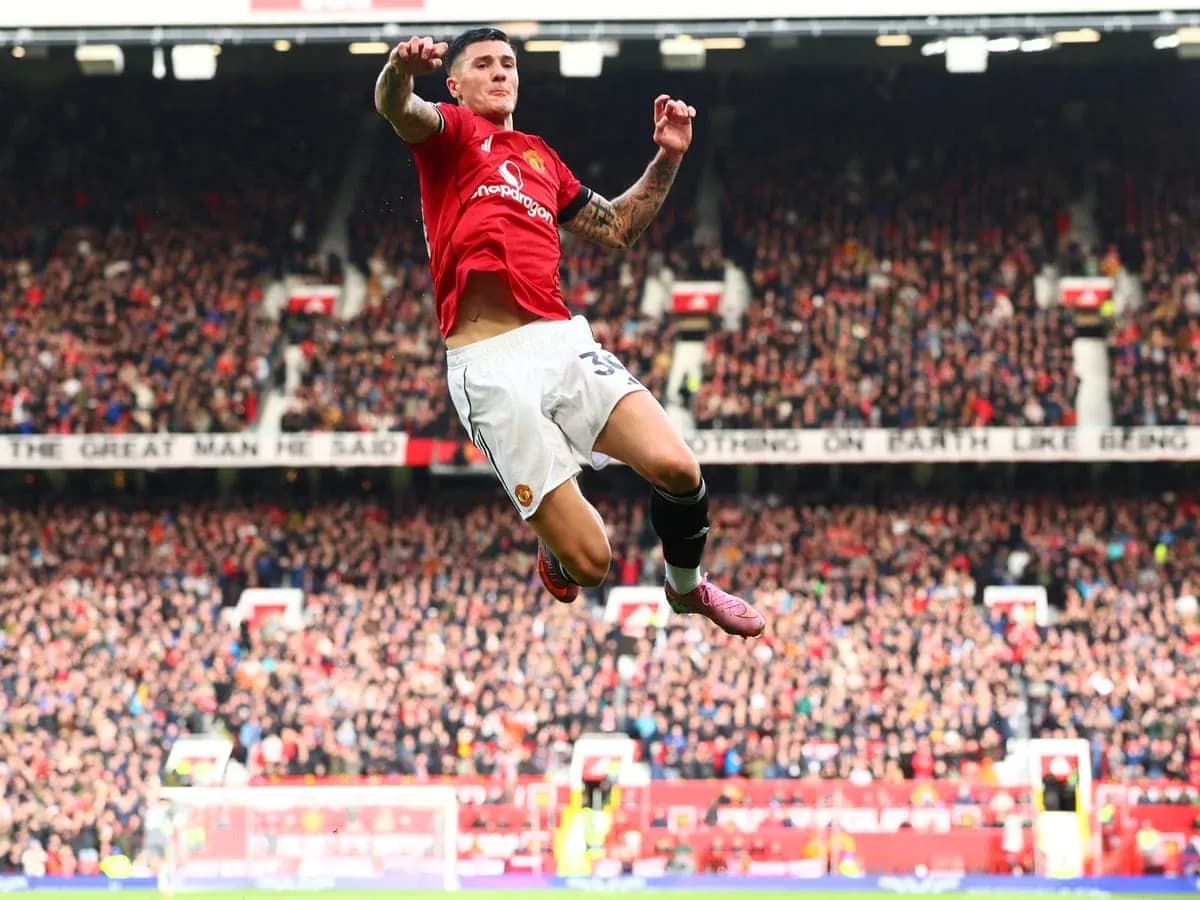
On 9 May 2026, the Stadium of Light in Sunderland will stage a meeting of two clubs travelling in very different lanes of the Premier League table. For Sunderland, safely in mid-table but still shaping their identity back in the top flight, this is a chance to claim a statement result against one of the division’s heavyweights. For Manchester United, chasing the top end of the standings, every point now carries Champions League weight as they look to protect a high position in the final sprint.
Season Context
Sunderland arrive in this game sitting 12th with 47 points from 35 matches, having scored 37 and conceded 46. That goal difference of -9 underlines a campaign of competitive but often tight games, where a solid home record has been their foundation (23 goals scored and 19 conceded in 17 home fixtures).
Manchester United travel north in a far more elevated position, 3rd in the table with 64 points from 35 matches. Their attack has been one of the more productive in the league (63 goals scored), but they have also shown defensive vulnerability at times (48 goals conceded). Even so, they have been difficult to beat, with only 7 defeats across those 35 games.
Form & Momentum
Sunderland’s recent form line of DLLWW tells of a side that has been inconsistent but capable of reacting (two wins in their last three games). Their broader league form string, stretching back through the calendar, is mixed yet resilient, and at home they have converted that into 8 wins from 17 matches (23 goals scored and 19 conceded).
Manchester United arrive with momentum behind them, their latest five-game sequence reading WWWLD. That run includes three straight victories before a draw and a defeat, reflecting a team generally strong in recent weeks (18 wins and 10 draws in 35 matches, with 63 goals scored). Their longer league form line confirms a side that has found ways to take points even when not at their best.
Head-to-Head Patterns
The recent history between these clubs leans towards Manchester United, especially in Premier League meetings. The most current reference point came at Old Trafford, where Manchester United beat Sunderland 2-0 in the Premier League in October 2025 [2-0 (Premier League, October 2025)].
At the Stadium of Light, United’s last league visit brought a convincing away victory, a 3-0 success in April 2017 [0-3 (Premier League, April 2017)]. That result followed a similarly comfortable home win at Old Trafford in December 2016, when Manchester United defeated Sunderland 3-1 [3-1 (Premier League, December 2016)].
Within those three fixtures, the pattern is clear: Manchester United have repeatedly found ways to score multiple goals, while Sunderland have struggled to keep them out in these matchups.
Tactical Preview
Sunderland’s season profile points to a flexible but largely possession-conscious side, most commonly set up in a 4-2-3-1 (18 matches) but with regular switches to 4-3-3 and 5-4-1 (5 matches each), as well as occasional use of 4-4-2, 4-1-4-1 and 3-4-3. That variety suggests a coach willing to adjust to the opponent, especially against stronger sides. At home they average 1.4 goals scored and 1.1 conceded per match, indicating a team that can create but must manage risk carefully.
In midfield, Sunderland can lean on the control and passing range of G. Xhaka, who has delivered 6 assists and completed 1,599 passes with 83% accuracy, alongside the energy and two-way work of E. Le Fée (4 goals, 5 assists, 81% pass accuracy and 81 tackles). That pair gives Sunderland the option to build patiently through the middle or to hit early diagonals into their forwards. Out wide and up front, options like B. Brobbey, B. Traoré and Eliezer Mayenda provide different profiles of movement and physicality, but Sunderland’s overall attacking output of 37 goals in 35 matches (1.1 per game) underlines that they will likely need to be efficient rather than expansive against this opponent.
Defensively, Sunderland’s back line has been solid but not watertight, with 46 goals conceded. The presence of D. Ballard (2 goals, strong duel numbers and 24 blocks) and Reinildo (one red card but 29 interceptions and 32 tackles) points to an aggressive, front-foot style of defending. T. Hume, who has played 35 matches with 64 tackles and 9 yellow cards, adds bite on the flank but will need to manage his discipline carefully against Manchester United’s wide threats.
Manchester United, by contrast, have settled into a clearer tactical identity, alternating primarily between a 3-4-2-1 (18 matches) and a 4-2-3-1 (17 matches). Both systems are built to maximise their attacking talent: they average 1.8 goals per game overall, rising to 2.0 at home and a still-strong 1.6 away. Their front line is deep with options. B. Šeško has 11 league goals from 30 appearances, offering a classic penalty-box presence with 34 shots on target from 51 attempts. Around him, Matheus Cunha (9 goals, 2 assists, 55 shots, 41 successful dribbles) and B. Mbeumo (9 goals, 3 assists, 46 key passes) bring mobility and creativity between the lines and in the channels.
Behind them, Bruno Fernandes is the creative heartbeat of this United side. With 19 assists and 121 key passes, plus 8 goals of his own, he is the league’s standout provider and the main reference for progression into the final third. Casemiro anchors the midfield with physicality and reading of the game (88 tackles, 27 blocks, 30 interceptions and 9 goals), though his 9 yellow cards and one yellow-red underline the fine disciplinary line he walks.
At the back, Manchester United have conceded 48 goals, a figure that shows they are not unbreakable. Yet they have managed 6 clean sheets and rarely fail to score themselves (only 3 matches without a goal). Full-backs like L. Shaw (1 assist, 71 tackles, 42 interceptions) and flexible defenders such as Lisandro Martínez and M. de Ligt give them options to shift between a back three and a back four depending on game state.
In the predictions data, Manchester United are favoured in the overall comparison model (64.5% to Sunderland’s 35.5%), with stronger ratings in form, attack and defence. The probabilistic edge is balanced between away win and draw, but Sunderland’s respectable home numbers and tactical adaptability mean this is unlikely to be straightforward.
Statistical Snapshot
- Competition: Premier League, season 2025 — 9 May 2026.
- Venue: Stadium of Light, Sunderland.
- Prediction: Win or draw — Double chance : draw or Manchester United.
- Win Probabilities: Home 10% / Draw 45% / Away 45%.
- Model: Sunderland 35.5% — Manchester United 64.5%.
Betting Verdict
The analytical picture points towards Manchester United avoiding defeat, with the model giving them a clear edge and the prediction explicitly favouring a draw or away win. With United’s attacking depth (63 goals) and recent positive run (WWWLD) against a Sunderland side that has been competitive but leaky overall (46 goals conceded), the “Double chance: draw or Manchester United” angle is well supported. Market prices for an away win sit roughly between 1.90 and 1.97, while Sunderland are generally around 3.70–4.04, reflecting that same balance of probabilities. For bettors, siding with United on the double-chance line looks the most defensible position, acknowledging Sunderland’s home resilience while respecting the visitors’ superior firepower and stronger head-to-head trend.
Related News

Premier League Managers Facing Potential Sackings During International Break

Arsenal's Myles Lewis-Skelly Names Unexpected Tottenham Rival as Toughest Premier League Opponent

Three Premier League Players Shining Early This Season

Premier League Early Season Reactions: Man City’s Strength, Arsenal’s Flaws, United’s Struggles

Premier League Returns October 10 After Extended September-October International Break

Fulham and Manchester United Share Points in 1-1 Draw